Updates
Herbie Estate Planning Field Report - April 2026
A check-in on what people are discussing, doing and not doing out in the wild, away from the world of federal estate tax planning.


Michael Moritz
Share this article:


Estate planning literature is overwhelmingly focused on the most complex scenarios, new developments in tax laws, and highly intricate strategies. Yet, with the increase in the federal estate tax exemption to $15 million per person, the number of individuals subject to estate tax dropped from tiny to infinitesimal. Indeed, even before the permanent increase in the estate tax exemption, in 2023, the Tax Policy Center estimated that less than 0.2 percent of individuals dying that year would be subject to the tax.
At Herbie, our backgrounds are from the law firms that serviced those individuals subject to estate tax (and their very successful companies). But now, we have the pleasure of observing, listening and learning from the overwhelming majority of Americans who still need an estate plan but whose issues aren’t centrally tied to the federal transfer tax system.
There are plenty of reports on estate planning, many of which are based on third-party studies and reports. Polls are great, but as we know from election polls, people don’t always tell the truth. So, with our ears to the ground (and laptop), we want to share what we are actually seeing in real time. Thus, we bring you the first installment of our Estate Planning Field Report.
I'll be your host, providing a 100% human-written check-in on what people are discussing, doing and not doing out in the wild, generally away from the world of federal estate tax planning.
This time, let’s focus on what we’re seeing and what’s unique or surprising about it.
What are we seeing?
Those who are planning the most aren’t who you might expect.
The estate planning industry focuses the most on the “standard plan” – typically recited as “all to spouse, then to kids.” But is that idealized married couple the one that's actually making an estate plan most frequently? From a relative proportionality standpoint, we’ve found the answer to be no.
First, we’ve observed that significantly more single individuals are making estate plans than married couples. There are many important factors for single individuals to consider in making an estate plan. A few of these reasons resonate with me as to why their proportionate number of wills being created is higher.
Single individuals don’t have immediate choices for fiduciary roles. While spouses assume that if something happens the other spouse is there to pick up the pieces, that’s not the case for someone who is single. Thinking about an Executor or Trustee takes on different meaning when there isn’t a spouse.
Solo parents are more focused on naming a Guardian for minor children, since that circumstance comes into play if the single person passes away (as opposed to only if both parents pass away).
Single individuals without a spouse or children rarely want their assets to pass in a manner consistent with the state intestacy laws. If you want your assets to pass to a specific individual, you have to put that in writing. This is often resonant with long-term domestic partners who never married (unless you live in one of the few states that provide for inheritance protections for domestic partners).
Next, we’ve observed a disproportionately high number of same-sex couples. Estate planning law is rooted in rights for spouses. A non-spouse generally is entitled to nothing under the law. Although in November 2025 the Supreme Court declined to revisit same-sex marriage rights set by its prior Obergefell decision, the fact itself that the question reached the Court is a simple example to highlight why same-sex couples might be rushing to get their estate plans in place.
Those who do plan aren’t doing what you might expect.
While estate planners might refer to that classic “all to spouse, then to kids” mantra, every day we are seeing other structures more than expected: parents leaving all their assets to one child (or maybe two), or with different percentages to different children.
Without a Will, your assets will be divided equally among a class of beneficiaries like your children. Well, a lot of people seemingly don’t want that and are therefore making their estate plans to protect against the intestacy rules.
A few thoughts regarding why this might be more prevalent now:
Senior living costs have never been higher. Elderly parents without significant means may live out their last years in the home of a child. That child is caring for and protecting their parent. If there isn't a significant inheritance (or even if there is), it sounds reasonable for some of these elderly parents to want to “repay” that child for all their valuable contributions of time, energy and money.
With divorce at an all-time high, it’s possible that there are parents of children who divorced from the other parent at a young age and thereafter did not have much of a role to play in the lives of their children.
Revocable Trusts because “they said so.”
Every day, someone says to me “I hear I need a trust.” The rationales differ, but the common thread is “someone told me something about trusts, and now I think I need them.”
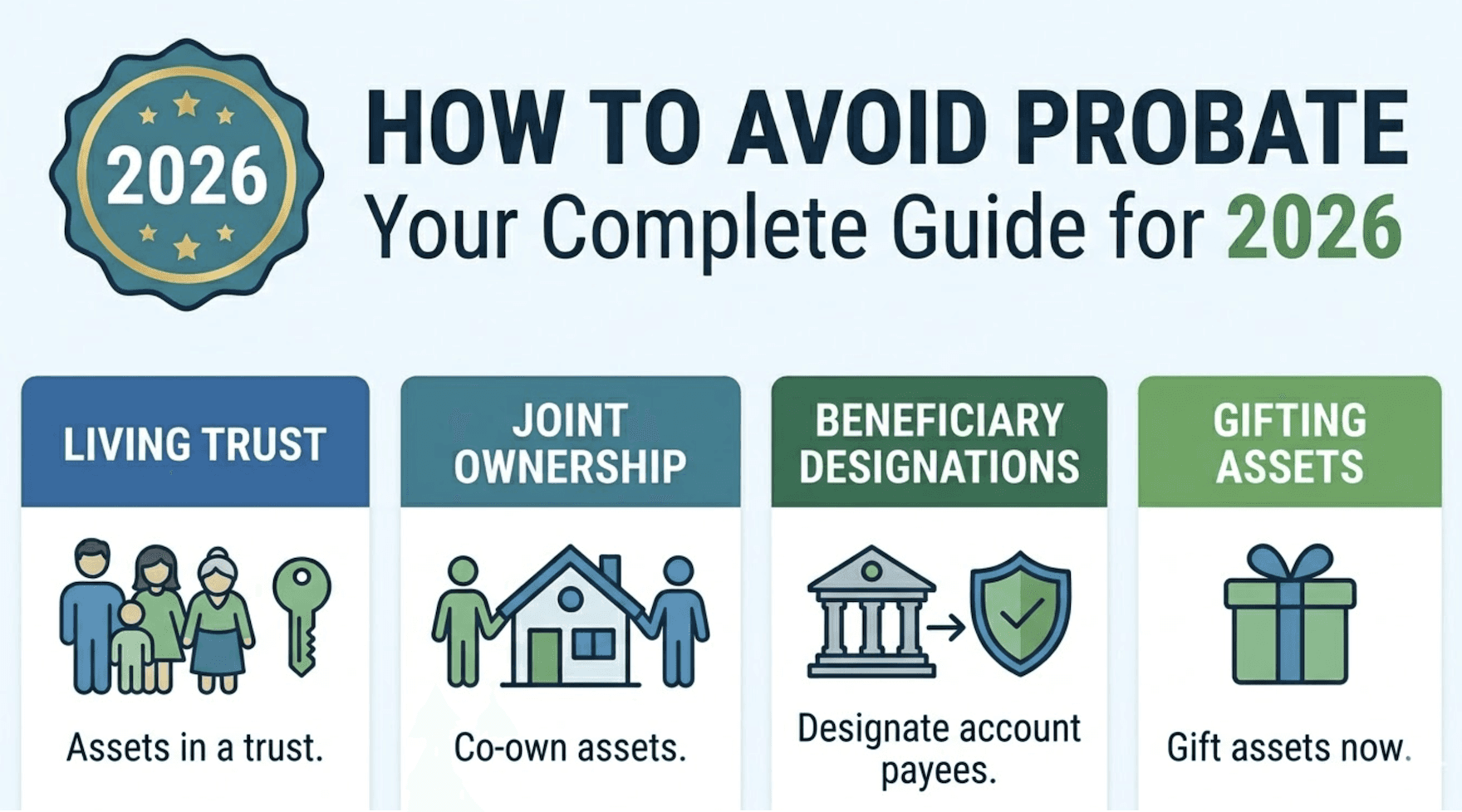
Both on our website and within our online platform, we describe many reasons why someone might want to set up a Revocable Trust, whether it be privacy, probate avoidance, control over dispositions to family members, or myriad other reasons.
When practicing in the biglaw ultra-high-net-worth setting, there isn’t even a thought about it – a Revocable Trust is created, and you’ll probably include all the continuing trusts: QTIP (Qualified Terminable Interest Trust) for the surviving spouse, Credit Shelter Trust to protect against the estate tax exemption, GST (Generation-Skipping Transfer Tax) Trusts, and additional trusts for descendants – all within the one Revocable Trust Agreement.
But now, back to the general public. What are people doing? What’s interesting to see is a very sizable number of people do choose to make a Revocable Trust…but that’s it. No continuing trusts – no Marital Trust or trusts for descendants. Most of the time, there’s simply no need for those, as there’s not much money at stake or the kids are adults. So the question becomes why do we see so many "simple" Revocable Trusts?
I think the public narrative about trusts has helped in one important regard: awareness of the burdens of probate. For an average person, the cost (time-wise and money-wise) of dealing with probate is substantial. If you simply transfer your assets to your trust during life and can avoid the majority or all of a full probate process, the trust setup is a win.
Meanwhile, another reason, which is significantly overlooked or misunderstood, is incapacity planning. If someone is incapacitated and their funds are owned outright and alone (not in a joint account), then the Power of Attorney form plays a huge role. It also requires a lot of dealings with banks, and probably a lot of frustrations. If, however, funds are owned by the trust at the time of incapacity, then the successor trustee already has access to everything simply by being the trustee. Life is much easier.
I would note that I do believe there are significant misconceptions about trusts with the general public, especially in connection with creditor protection during one’s lifetime. That being said, the anecdotal evidence is clear that scores of people are creating trusts simply because they want some level of protection or level of efficiency short-term, without needing to worry about tax or even consider many of the more complicated yet routine reasons why Revocable Trusts are often created for the ultra-high-net-worth crowd.
Stay tuned for our next Field Report, when we’ll focus on what we’re being asked about and the unique considerations leading to and resulting from those scenarios.
* * * * * * * * * *
Michael Moritz is a Co-Founder of Herbie. Michael was previously an estate planning attorney to ultra-high-net-worth clients at the elite law firm Paul, Weiss, Rifkind, Wharton & Garrison, and before that, at McDermott Will & Emery. He has vast experience in the preparation of wills, trusts, powers of attorney and many other critical estate planning documents. Michael began his career in the top-ranked litigation group at Skadden, Arps, Slate, Meagher & Flom in New York, focusing on securities defense litigation for public companies and other complex commercial lawsuits.
Michael received his JD and a Master of Laws (LLM) in International & Comparative Law at Duke Law School. He later received an LLM in Taxation with an estate planning concentration in the first-ranked NYU Law School program. Michael went to Duke University for his undergraduate education.
Estate planning literature is overwhelmingly focused on the most complex scenarios, new developments in tax laws, and highly intricate strategies. Yet, with the increase in the federal estate tax exemption to $15 million per person, the number of individuals subject to estate tax dropped from tiny to infinitesimal. Indeed, even before the permanent increase in the estate tax exemption, in 2023, the Tax Policy Center estimated that less than 0.2 percent of individuals dying that year would be subject to the tax.
At Herbie, our backgrounds are from the law firms that serviced those individuals subject to estate tax (and their very successful companies). But now, we have the pleasure of observing, listening and learning from the overwhelming majority of Americans who still need an estate plan but whose issues aren’t centrally tied to the federal transfer tax system.
There are plenty of reports on estate planning, many of which are based on third-party studies and reports. Polls are great, but as we know from election polls, people don’t always tell the truth. So, with our ears to the ground (and laptop), we want to share what we are actually seeing in real time. Thus, we bring you the first installment of our Estate Planning Field Report.
I'll be your host, providing a 100% human-written check-in on what people are discussing, doing and not doing out in the wild, generally away from the world of federal estate tax planning.
This time, let’s focus on what we’re seeing and what’s unique or surprising about it.
What are we seeing?
Those who are planning the most aren’t who you might expect.
The estate planning industry focuses the most on the “standard plan” – typically recited as “all to spouse, then to kids.” But is that idealized married couple the one that's actually making an estate plan most frequently? From a relative proportionality standpoint, we’ve found the answer to be no.
First, we’ve observed that significantly more single individuals are making estate plans than married couples. There are many important factors for single individuals to consider in making an estate plan. A few of these reasons resonate with me as to why their proportionate number of wills being created is higher.
Single individuals don’t have immediate choices for fiduciary roles. While spouses assume that if something happens the other spouse is there to pick up the pieces, that’s not the case for someone who is single. Thinking about an Executor or Trustee takes on different meaning when there isn’t a spouse.
Solo parents are more focused on naming a Guardian for minor children, since that circumstance comes into play if the single person passes away (as opposed to only if both parents pass away).
Single individuals without a spouse or children rarely want their assets to pass in a manner consistent with the state intestacy laws. If you want your assets to pass to a specific individual, you have to put that in writing. This is often resonant with long-term domestic partners who never married (unless you live in one of the few states that provide for inheritance protections for domestic partners).
Next, we’ve observed a disproportionately high number of same-sex couples. Estate planning law is rooted in rights for spouses. A non-spouse generally is entitled to nothing under the law. Although in November 2025 the Supreme Court declined to revisit same-sex marriage rights set by its prior Obergefell decision, the fact itself that the question reached the Court is a simple example to highlight why same-sex couples might be rushing to get their estate plans in place.
Those who do plan aren’t doing what you might expect.
While estate planners might refer to that classic “all to spouse, then to kids” mantra, every day we are seeing other structures more than expected: parents leaving all their assets to one child (or maybe two), or with different percentages to different children.
Without a Will, your assets will be divided equally among a class of beneficiaries like your children. Well, a lot of people seemingly don’t want that and are therefore making their estate plans to protect against the intestacy rules.
A few thoughts regarding why this might be more prevalent now:
Senior living costs have never been higher. Elderly parents without significant means may live out their last years in the home of a child. That child is caring for and protecting their parent. If there isn't a significant inheritance (or even if there is), it sounds reasonable for some of these elderly parents to want to “repay” that child for all their valuable contributions of time, energy and money.
With divorce at an all-time high, it’s possible that there are parents of children who divorced from the other parent at a young age and thereafter did not have much of a role to play in the lives of their children.
Revocable Trusts because “they said so.”
Every day, someone says to me “I hear I need a trust.” The rationales differ, but the common thread is “someone told me something about trusts, and now I think I need them.”
Both on our website and within our online platform, we describe many reasons why someone might want to set up a Revocable Trust, whether it be privacy, probate avoidance, control over dispositions to family members, or myriad other reasons.
When practicing in the biglaw ultra-high-net-worth setting, there isn’t even a thought about it – a Revocable Trust is created, and you’ll probably include all the continuing trusts: QTIP (Qualified Terminable Interest Trust) for the surviving spouse, Credit Shelter Trust to protect against the estate tax exemption, GST (Generation-Skipping Transfer Tax) Trusts, and additional trusts for descendants – all within the one Revocable Trust Agreement.
But now, back to the general public. What are people doing? What’s interesting to see is a very sizable number of people do choose to make a Revocable Trust…but that’s it. No continuing trusts – no Marital Trust or trusts for descendants. Most of the time, there’s simply no need for those, as there’s not much money at stake or the kids are adults. So the question becomes why do we see so many "simple" Revocable Trusts?
I think the public narrative about trusts has helped in one important regard: awareness of the burdens of probate. For an average person, the cost (time-wise and money-wise) of dealing with probate is substantial. If you simply transfer your assets to your trust during life and can avoid the majority or all of a full probate process, the trust setup is a win.
Meanwhile, another reason, which is significantly overlooked or misunderstood, is incapacity planning. If someone is incapacitated and their funds are owned outright and alone (not in a joint account), then the Power of Attorney form plays a huge role. It also requires a lot of dealings with banks, and probably a lot of frustrations. If, however, funds are owned by the trust at the time of incapacity, then the successor trustee already has access to everything simply by being the trustee. Life is much easier.
I would note that I do believe there are significant misconceptions about trusts with the general public, especially in connection with creditor protection during one’s lifetime. That being said, the anecdotal evidence is clear that scores of people are creating trusts simply because they want some level of protection or level of efficiency short-term, without needing to worry about tax or even consider many of the more complicated yet routine reasons why Revocable Trusts are often created for the ultra-high-net-worth crowd.
Stay tuned for our next Field Report, when we’ll focus on what we’re being asked about and the unique considerations leading to and resulting from those scenarios.
* * * * * * * * * *
Michael Moritz is a Co-Founder of Herbie. Michael was previously an estate planning attorney to ultra-high-net-worth clients at the elite law firm Paul, Weiss, Rifkind, Wharton & Garrison, and before that, at McDermott Will & Emery. He has vast experience in the preparation of wills, trusts, powers of attorney and many other critical estate planning documents. Michael began his career in the top-ranked litigation group at Skadden, Arps, Slate, Meagher & Flom in New York, focusing on securities defense litigation for public companies and other complex commercial lawsuits.
Michael received his JD and a Master of Laws (LLM) in International & Comparative Law at Duke Law School. He later received an LLM in Taxation with an estate planning concentration in the first-ranked NYU Law School program. Michael went to Duke University for his undergraduate education.
Share this article:
You might also like these related posts