Guides
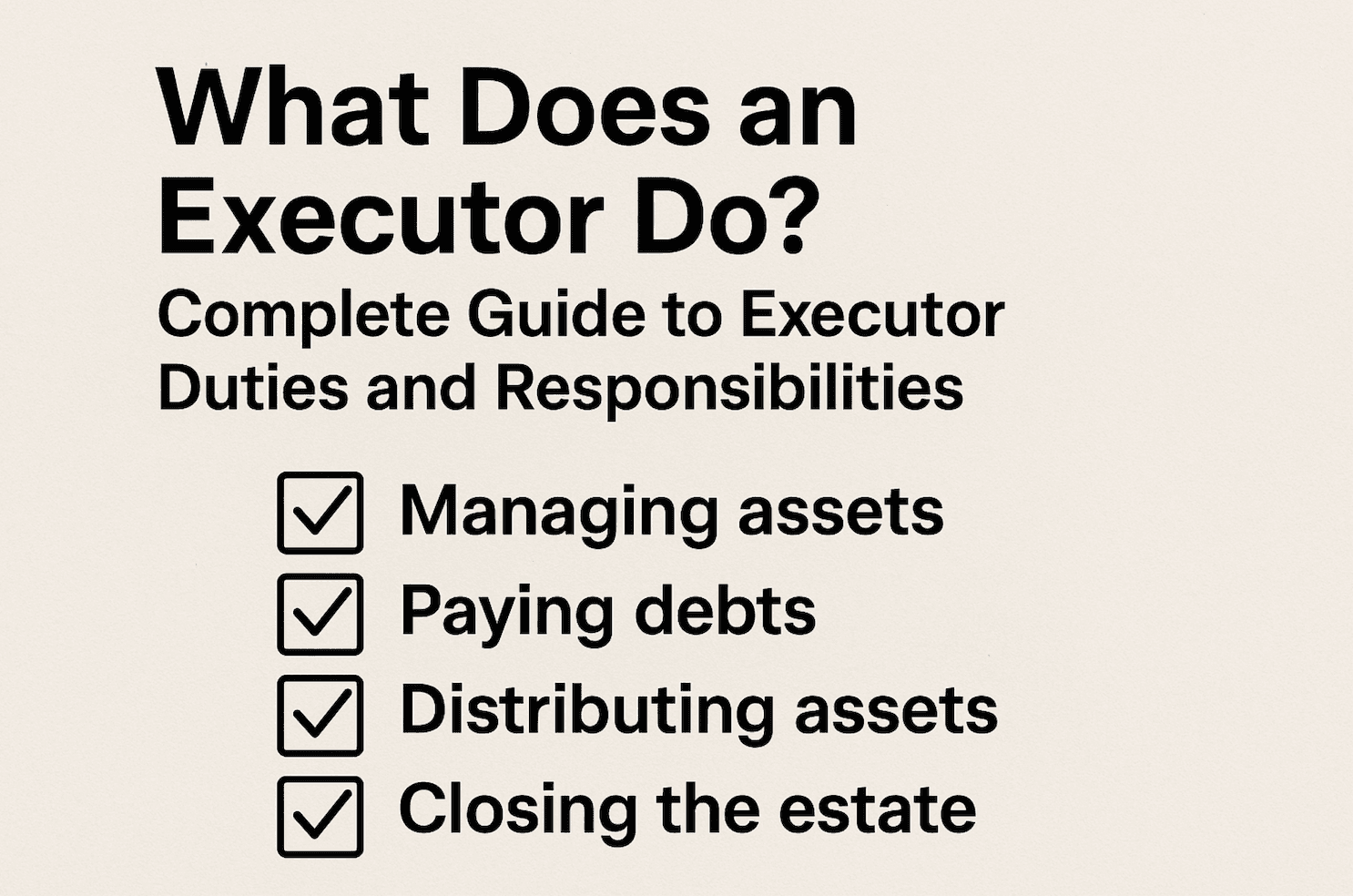
What Does an Executor Do? Complete Guide to Executor Duties and Responsibilities
A complete guide to what an executor does, how the process works, and what to expect when managing an estate.
What Does an Executor Do? Complete Guide to Executor Duties and Responsibilities
A complete guide to what an executor does, how the process works, and what to expect when managing an estate.
A complete guide to what an executor does, how the process works, and what to expect when managing an estate.
Share this article


If someone has asked you to be the executor (or “personal representative” in some states) in their will, or you’re thinking about who to name as your own executor, you might be wondering what you're signing up for. Or if you're creating your own estate plan, you need to understand what you're asking of the person you choose.
An executor plays one of the most important roles in estate administration, yet most people have no idea what the job actually involves.
This guide explains everything an executor does, how long it takes, what it pays, and what to consider before accepting (or declining) this responsibility.
What is an Executor?
An executor or personal representative is the person named in a will to carry out the deceased person's wishes. They're responsible for managing the estate, paying debts and distributing assets to beneficiaries.
Think of an executor as the project manager for someone's estate. They coordinate all the moving pieces, make decisions, handle paperwork and ensure everything gets done correctly and legally.
For most estates, being an executor requires 20-100 hours of work over 6-18 months. For complex estates, it can take years and hundreds of hours.
The Big Picture: What Executors Actually Do
At a high level, an executor:
Gathers and secures assets
Notifies relevant parties
Manages estate finances
Pays debts and taxes
Distributes assets to beneficiaries
Closes the estate
Let's break down each of these responsibilities.
Step 1: Initial Responsibilities (Weeks 1-4)
Locate and Review the Will
Your first job is finding the original will. Look in:
Safe deposit boxes
Home safes
Filing cabinets
The attorney's office
The deceased's important papers
You need the original document with original signatures. Copies won't suffice for probate court. With Herbie, you can identify in the platform where you keep your original documents and share that information with your executor.
Arrange the Funeral
Unless other arrangements were made in advance, the executor typically coordinates funeral and burial according to the deceased's wishes. This includes:
Working with funeral homes
Making burial or cremation arrangements
Planning memorial services
Paying funeral expenses from estate funds
Secure Property and Assets
You must protect estate assets immediately:
Secure the home (change locks if needed)
Ensure adequate insurance on property
Protect valuables
Care for pets
Forward mail
Maintain property (lawn care, utilities, etc.)
File the Will with Probate Court
In most states, you should file the will with the local probate court within a certain amount of time following death. This officially begins the probate process which will give you legal authority to act.
Step 2: Get Legal Authority (Weeks 4-12)
Open Probate
You file a petition with the probate court to be appointed as executor. This involves:
Completing court forms
Submitting the original will
Providing death certificates
Paying filing fees
Potentially attending a court hearing
The court issues "letters testamentary" (or "letters of administration"). This is your official authorization to act on behalf of the estate. This could take a couple of weeks or several months depending on the location of death and how backed up the court is.
Obtain Multiple Death Certificates
You'll need official death certificates for:
Banks and financial institutions
Insurance companies
Social Security
Pension administrators
Property transfers
Each creditor
Order at least 10-15 certified copies.
Get a Tax ID Number
Apply for an Employer Identification Number (EIN) for the estate through the IRS. This allows you to:
Open estate bank accounts
File estate tax returns
Handle financial transactions
Step 3: Notify and Communicate (Weeks 1-12)
Notify Beneficiaries and Heirs
State law requires you to formally notify:
All beneficiaries named in the will
All legal heirs (family members who would inherit under state law, called intestacy)
This notification must include information about the probate proceedings and their rights.
Notify Creditors
You must give public notice to creditors, typically by:
Publishing a notice in local newspapers
Sending direct notice to known creditors
Providing information about the claims filing deadline
Creditors usually have 3-6 months to file claims against the estate.
Contact Government Agencies
Notify:
Social Security Administration (to stop benefits and claim survivor benefits)
Pension administrators
Veterans Affairs (if applicable)
Medicare/Medicaid
Employer (if applicable)
Notify Financial Institutions and Others
Contact:
Banks and credit unions
Credit card companies
Insurance companies
Investment firms
Mortgage lenders
Utility companies
Subscription services
Step 4: Manage Estate Finances (Ongoing)
Open an Estate Bank Account
You need a separate account for the estate's finances. Never mix estate funds with your personal money.
Use this account for:
Depositing income to the estate
Paying estate expenses
Paying creditor claims
Making distributions to beneficiaries
Create an Inventory of Assets
Document everything the deceased owned:
Real estate and property
Bank and investment accounts
Retirement accounts
Life insurance policies
Business interests
Vehicles
Personal property and valuables
Digital assets
If the deceased individual had Herbie, this will be a piece of cake, since all the important assets will already have been logged within the Herbie platform!
Get professional appraisals for:
Real estate
Businesses
Collectibles and art
Jewelry
You must file this inventory with the probate court, usually within a set number of days.
Maintain Property and Assets
While the estate is open, you must:
Pay mortgages and property taxes
Maintain insurance
Handle repairs and maintenance
Manage rental properties if applicable
Make investment decisions to preserve value
Protect assets from loss or theft
Keep Detailed Records
Document everything:
All income and expenses
Payments to creditors
Communications with beneficiaries
Actions taken and decisions made
You'll need these records for:
Court accountings
Tax returns
Defending your actions if challenged
Step 5: Pay Debts and Taxes (Months 3-12)
Review and Pay Valid Claims
When creditors file claims, you must:
Verify the claims are legitimate
Determine priority (some debts must be paid before others)
Pay approved claims from estate funds
Object to invalid claims
Priority order typically:
Funeral and burial expenses
Estate administration costs
Federal taxes
State and local taxes
Medical bills from final illness
Other debts
File Tax Returns
You're responsible for filing:
Final individual income tax return: For the deceased's last tax year
Estate income tax return: If the estate earns more than $600
Estate tax return: If the estate exceeds federal exemption ($15 million per person in 2026) or a state threshold (certain states have state estate taxes; consult your accountant).
You may need to hire an accountant for complex tax situations. Estate funds can pay for professional help.
Pay Estate Taxes
If estate taxes are due, you must:
Calculate the amount owed
File returns on time (within 9 months)
Request extensions if needed
Pay taxes from estate funds before distributing to beneficiaries
Step 6: Distribute Assets (Months 6-18)
Wait for the Claims Period
Generally, assets aren’t distributed until:
The creditor claims period expires
All debts are paid
Tax returns are filed and accepted
You receive court approval
Distribute Specific Bequests
First, distribute any specific gifts named in the will:
Grandmother's ring to granddaughter
Car to nephew
Stamp collection to best friend
Get signed receipts from everyone.
Distribute Remaining Assets
After specific bequests, distribute the remainder according to the will's instructions. This might involve:
Selling property and dividing proceeds
Transferring assets directly to beneficiaries
Distributing percentages of accounts
Handle Real Estate
If the will directs you to sell property:
List the property
Negotiate sale
Complete closing
Distribute proceeds
If property goes to beneficiaries directly:
Transfer deeds
Ensure clear title
Handle any mortgages
Step 7: Close the Estate (Months 12-18+)
Prepare Final Accounting
Create a detailed report showing:
All assets at date of death
Income earned by the estate
Expenses paid
Distributions to beneficiaries
Remaining assets if any
File this with the probate court and provide copies to beneficiaries. Sometimes there are less formal procedures for the accounting. This will depend on which state you’re in, and also may depend on how adversarial the beneficiaries and other parties are.
Get Beneficiary Approval
Beneficiaries review and (hopefully) approve your accounting. If they object, you may need court hearings to resolve disputes.
Request Discharge
Once everything is complete and approved:
File a petition to close the estate
Request formal discharge as executor
Receive the court's final order closing probate
This releases you from further liability and officially ends your role.
How Long Does It Take?
Simple estates: 6-12 months
No real estate to sell
Few creditors
Cooperative beneficiaries
No tax complications
Average estates: 12-18 months
Some property to sell
Multiple accounts and assets
Standard tax situations
Normal complexity
Complex estates: 18 months to 3+ years
Significant real estate
Business interests
Estate tax returns
Disputes among beneficiaries
Complicated assets
What Does an Executor Get Paid?
Executors are entitled to "reasonable compensation" for their work. This typically means:
Statutory fees (some states): A percentage of the estate value, often 2-5%
Reasonable hourly rate (other states): Based on time and complexity
Examples:
$250,000 estate: $5,000-$12,500
$500,000 estate: $10,000-$25,000
$1,000,000 estate: $20,000-$50,000
Important notes:
Executor fees are taxable income (unlike inheritances)
Family members often waive fees, and some wills also direct that family members not take any commissions
You can decline payment and receive the inheritance tax-free instead
Professional executors (attorneys, trust companies) typically take the full statutory fee or another amount agreed on by the parties
Can You Decline?
Yes! Being named in a will doesn't obligate you to serve. You can decline by:
Filing a declination with the probate court
Notifying the deceased's family
Allowing an alternate executor to serve
Valid reasons to decline:
You live too far away
You don't have time
You have health issues
You're not comfortable with the responsibility
Relationships with beneficiaries are strained
The estate is complex and you lack expertise
It's better to decline than to do a poor job.
What Makes a Good Executor?
The best executors are:
Organized: Can manage paperwork, deadlines, and details
Trustworthy: Will act in the estate's best interest, not their own
Financially responsible: Comfortable managing money and making financial decisions
Emotionally stable: Can handle family dynamics during a difficult time
Available: Has time to dedicate to the role
Local: Lives near the deceased's property (helpful but not required)
Communicative: Keeps beneficiaries informed and responds promptly
Getting Help
Executors can hire professionals and pay them from estate funds:
Estate attorneys: For legal guidance
Accountants: For tax returns
Appraisers: For property valuations
Real estate agents: For property sales
Financial advisors: For investment decisions
You're not expected to be an expert – just to make good decisions and get help when needed. And the Herbie team is here to help too! With a Herbie One subscription, we’ll be there when the time comes to answer questions you have.
Choosing an Executor for Your Will
When creating your estate plan with Herbie, consider:
Don't just pick your oldest child: Choose based on ability, not birth order
Ask them first: Make sure they're willing
Name an alternate: In case your first choice can't serve
Think about location: Someone local can handle property matters more easily
Co-executors: Can be helpful if they’re aligned, but unhelpful if they may argue or not work well with each other
Consider professional help: For very large or complex estates
The Bottom Line
Being an executor is serious work, but it's also an honor. You're helping someone you care about ensure their final wishes are carried out.
If you're choosing an executor for your own estate plan, choose wisely. Pick someone responsible, trustworthy and capable. Ask them first. And make their job easier by creating a clear, organized estate plan.
If you've been asked to serve as executor, understand what you're committing to. It's okay to ask questions. It's okay to decline if you're not the right fit. But if you accept, know that you're playing a crucial role in honoring someone's legacy.
Create your will with Herbie → and choose an executor who's right for your situation.
If someone has asked you to be the executor (or “personal representative” in some states) in their will, or you’re thinking about who to name as your own executor, you might be wondering what you're signing up for. Or if you're creating your own estate plan, you need to understand what you're asking of the person you choose.
An executor plays one of the most important roles in estate administration, yet most people have no idea what the job actually involves.
This guide explains everything an executor does, how long it takes, what it pays, and what to consider before accepting (or declining) this responsibility.
What is an Executor?
An executor or personal representative is the person named in a will to carry out the deceased person's wishes. They're responsible for managing the estate, paying debts and distributing assets to beneficiaries.
Think of an executor as the project manager for someone's estate. They coordinate all the moving pieces, make decisions, handle paperwork and ensure everything gets done correctly and legally.
For most estates, being an executor requires 20-100 hours of work over 6-18 months. For complex estates, it can take years and hundreds of hours.
The Big Picture: What Executors Actually Do
At a high level, an executor:
Gathers and secures assets
Notifies relevant parties
Manages estate finances
Pays debts and taxes
Distributes assets to beneficiaries
Closes the estate
Let's break down each of these responsibilities.
Step 1: Initial Responsibilities (Weeks 1-4)
Locate and Review the Will
Your first job is finding the original will. Look in:
Safe deposit boxes
Home safes
Filing cabinets
The attorney's office
The deceased's important papers
You need the original document with original signatures. Copies won't suffice for probate court. With Herbie, you can identify in the platform where you keep your original documents and share that information with your executor.
Arrange the Funeral
Unless other arrangements were made in advance, the executor typically coordinates funeral and burial according to the deceased's wishes. This includes:
Working with funeral homes
Making burial or cremation arrangements
Planning memorial services
Paying funeral expenses from estate funds
Secure Property and Assets
You must protect estate assets immediately:
Secure the home (change locks if needed)
Ensure adequate insurance on property
Protect valuables
Care for pets
Forward mail
Maintain property (lawn care, utilities, etc.)
File the Will with Probate Court
In most states, you should file the will with the local probate court within a certain amount of time following death. This officially begins the probate process which will give you legal authority to act.
Step 2: Get Legal Authority (Weeks 4-12)
Open Probate
You file a petition with the probate court to be appointed as executor. This involves:
Completing court forms
Submitting the original will
Providing death certificates
Paying filing fees
Potentially attending a court hearing
The court issues "letters testamentary" (or "letters of administration"). This is your official authorization to act on behalf of the estate. This could take a couple of weeks or several months depending on the location of death and how backed up the court is.
Obtain Multiple Death Certificates
You'll need official death certificates for:
Banks and financial institutions
Insurance companies
Social Security
Pension administrators
Property transfers
Each creditor
Order at least 10-15 certified copies.
Get a Tax ID Number
Apply for an Employer Identification Number (EIN) for the estate through the IRS. This allows you to:
Open estate bank accounts
File estate tax returns
Handle financial transactions
Step 3: Notify and Communicate (Weeks 1-12)
Notify Beneficiaries and Heirs
State law requires you to formally notify:
All beneficiaries named in the will
All legal heirs (family members who would inherit under state law, called intestacy)
This notification must include information about the probate proceedings and their rights.
Notify Creditors
You must give public notice to creditors, typically by:
Publishing a notice in local newspapers
Sending direct notice to known creditors
Providing information about the claims filing deadline
Creditors usually have 3-6 months to file claims against the estate.
Contact Government Agencies
Notify:
Social Security Administration (to stop benefits and claim survivor benefits)
Pension administrators
Veterans Affairs (if applicable)
Medicare/Medicaid
Employer (if applicable)
Notify Financial Institutions and Others
Contact:
Banks and credit unions
Credit card companies
Insurance companies
Investment firms
Mortgage lenders
Utility companies
Subscription services
Step 4: Manage Estate Finances (Ongoing)
Open an Estate Bank Account
You need a separate account for the estate's finances. Never mix estate funds with your personal money.
Use this account for:
Depositing income to the estate
Paying estate expenses
Paying creditor claims
Making distributions to beneficiaries
Create an Inventory of Assets
Document everything the deceased owned:
Real estate and property
Bank and investment accounts
Retirement accounts
Life insurance policies
Business interests
Vehicles
Personal property and valuables
Digital assets
If the deceased individual had Herbie, this will be a piece of cake, since all the important assets will already have been logged within the Herbie platform!
Get professional appraisals for:
Real estate
Businesses
Collectibles and art
Jewelry
You must file this inventory with the probate court, usually within a set number of days.
Maintain Property and Assets
While the estate is open, you must:
Pay mortgages and property taxes
Maintain insurance
Handle repairs and maintenance
Manage rental properties if applicable
Make investment decisions to preserve value
Protect assets from loss or theft
Keep Detailed Records
Document everything:
All income and expenses
Payments to creditors
Communications with beneficiaries
Actions taken and decisions made
You'll need these records for:
Court accountings
Tax returns
Defending your actions if challenged
Step 5: Pay Debts and Taxes (Months 3-12)
Review and Pay Valid Claims
When creditors file claims, you must:
Verify the claims are legitimate
Determine priority (some debts must be paid before others)
Pay approved claims from estate funds
Object to invalid claims
Priority order typically:
Funeral and burial expenses
Estate administration costs
Federal taxes
State and local taxes
Medical bills from final illness
Other debts
File Tax Returns
You're responsible for filing:
Final individual income tax return: For the deceased's last tax year
Estate income tax return: If the estate earns more than $600
Estate tax return: If the estate exceeds federal exemption ($15 million per person in 2026) or a state threshold (certain states have state estate taxes; consult your accountant).
You may need to hire an accountant for complex tax situations. Estate funds can pay for professional help.
Pay Estate Taxes
If estate taxes are due, you must:
Calculate the amount owed
File returns on time (within 9 months)
Request extensions if needed
Pay taxes from estate funds before distributing to beneficiaries
Step 6: Distribute Assets (Months 6-18)
Wait for the Claims Period
Generally, assets aren’t distributed until:
The creditor claims period expires
All debts are paid
Tax returns are filed and accepted
You receive court approval
Distribute Specific Bequests
First, distribute any specific gifts named in the will:
Grandmother's ring to granddaughter
Car to nephew
Stamp collection to best friend
Get signed receipts from everyone.
Distribute Remaining Assets
After specific bequests, distribute the remainder according to the will's instructions. This might involve:
Selling property and dividing proceeds
Transferring assets directly to beneficiaries
Distributing percentages of accounts
Handle Real Estate
If the will directs you to sell property:
List the property
Negotiate sale
Complete closing
Distribute proceeds
If property goes to beneficiaries directly:
Transfer deeds
Ensure clear title
Handle any mortgages
Step 7: Close the Estate (Months 12-18+)
Prepare Final Accounting
Create a detailed report showing:
All assets at date of death
Income earned by the estate
Expenses paid
Distributions to beneficiaries
Remaining assets if any
File this with the probate court and provide copies to beneficiaries. Sometimes there are less formal procedures for the accounting. This will depend on which state you’re in, and also may depend on how adversarial the beneficiaries and other parties are.
Get Beneficiary Approval
Beneficiaries review and (hopefully) approve your accounting. If they object, you may need court hearings to resolve disputes.
Request Discharge
Once everything is complete and approved:
File a petition to close the estate
Request formal discharge as executor
Receive the court's final order closing probate
This releases you from further liability and officially ends your role.
How Long Does It Take?
Simple estates: 6-12 months
No real estate to sell
Few creditors
Cooperative beneficiaries
No tax complications
Average estates: 12-18 months
Some property to sell
Multiple accounts and assets
Standard tax situations
Normal complexity
Complex estates: 18 months to 3+ years
Significant real estate
Business interests
Estate tax returns
Disputes among beneficiaries
Complicated assets
What Does an Executor Get Paid?
Executors are entitled to "reasonable compensation" for their work. This typically means:
Statutory fees (some states): A percentage of the estate value, often 2-5%
Reasonable hourly rate (other states): Based on time and complexity
Examples:
$250,000 estate: $5,000-$12,500
$500,000 estate: $10,000-$25,000
$1,000,000 estate: $20,000-$50,000
Important notes:
Executor fees are taxable income (unlike inheritances)
Family members often waive fees, and some wills also direct that family members not take any commissions
You can decline payment and receive the inheritance tax-free instead
Professional executors (attorneys, trust companies) typically take the full statutory fee or another amount agreed on by the parties
Can You Decline?
Yes! Being named in a will doesn't obligate you to serve. You can decline by:
Filing a declination with the probate court
Notifying the deceased's family
Allowing an alternate executor to serve
Valid reasons to decline:
You live too far away
You don't have time
You have health issues
You're not comfortable with the responsibility
Relationships with beneficiaries are strained
The estate is complex and you lack expertise
It's better to decline than to do a poor job.
What Makes a Good Executor?
The best executors are:
Organized: Can manage paperwork, deadlines, and details
Trustworthy: Will act in the estate's best interest, not their own
Financially responsible: Comfortable managing money and making financial decisions
Emotionally stable: Can handle family dynamics during a difficult time
Available: Has time to dedicate to the role
Local: Lives near the deceased's property (helpful but not required)
Communicative: Keeps beneficiaries informed and responds promptly
Getting Help
Executors can hire professionals and pay them from estate funds:
Estate attorneys: For legal guidance
Accountants: For tax returns
Appraisers: For property valuations
Real estate agents: For property sales
Financial advisors: For investment decisions
You're not expected to be an expert – just to make good decisions and get help when needed. And the Herbie team is here to help too! With a Herbie One subscription, we’ll be there when the time comes to answer questions you have.
Choosing an Executor for Your Will
When creating your estate plan with Herbie, consider:
Don't just pick your oldest child: Choose based on ability, not birth order
Ask them first: Make sure they're willing
Name an alternate: In case your first choice can't serve
Think about location: Someone local can handle property matters more easily
Co-executors: Can be helpful if they’re aligned, but unhelpful if they may argue or not work well with each other
Consider professional help: For very large or complex estates
The Bottom Line
Being an executor is serious work, but it's also an honor. You're helping someone you care about ensure their final wishes are carried out.
If you're choosing an executor for your own estate plan, choose wisely. Pick someone responsible, trustworthy and capable. Ask them first. And make their job easier by creating a clear, organized estate plan.
If you've been asked to serve as executor, understand what you're committing to. It's okay to ask questions. It's okay to decline if you're not the right fit. But if you accept, know that you're playing a crucial role in honoring someone's legacy.
Create your will with Herbie → and choose an executor who's right for your situation.
Share this article
Share this article
You might also like these related posts